Gynecomastia Surgery


Gynecomastia is an enlargement of male breast tissue that can occur at any age. It may be related to hormonal changes, genetics, weight fluctuations, medications, or other factors. For some men, excess chest tissue persists despite weight loss and exercise and can affect confidence or make certain clothing or activities uncomfortable.
Gynecomastia surgery is designed to create a flatter, more defined chest by removing excess glandular tissue and/or fat and, when necessary, removing excess skin. Treatment is individualized based on the amount and type of tissue present, skin quality, and your desired result.
Gynecomastia surgery may be appropriate for men who have persistent enlargement of the chest that does not improve adequately with weight loss or exercise.
Good candidates generally:
If significant weight loss is still planned, it may be preferable to reach a stable weight before surgery. Your surgeon may also recommend evaluating medications, hormonal factors, or other potential causes of gynecomastia before proceeding.
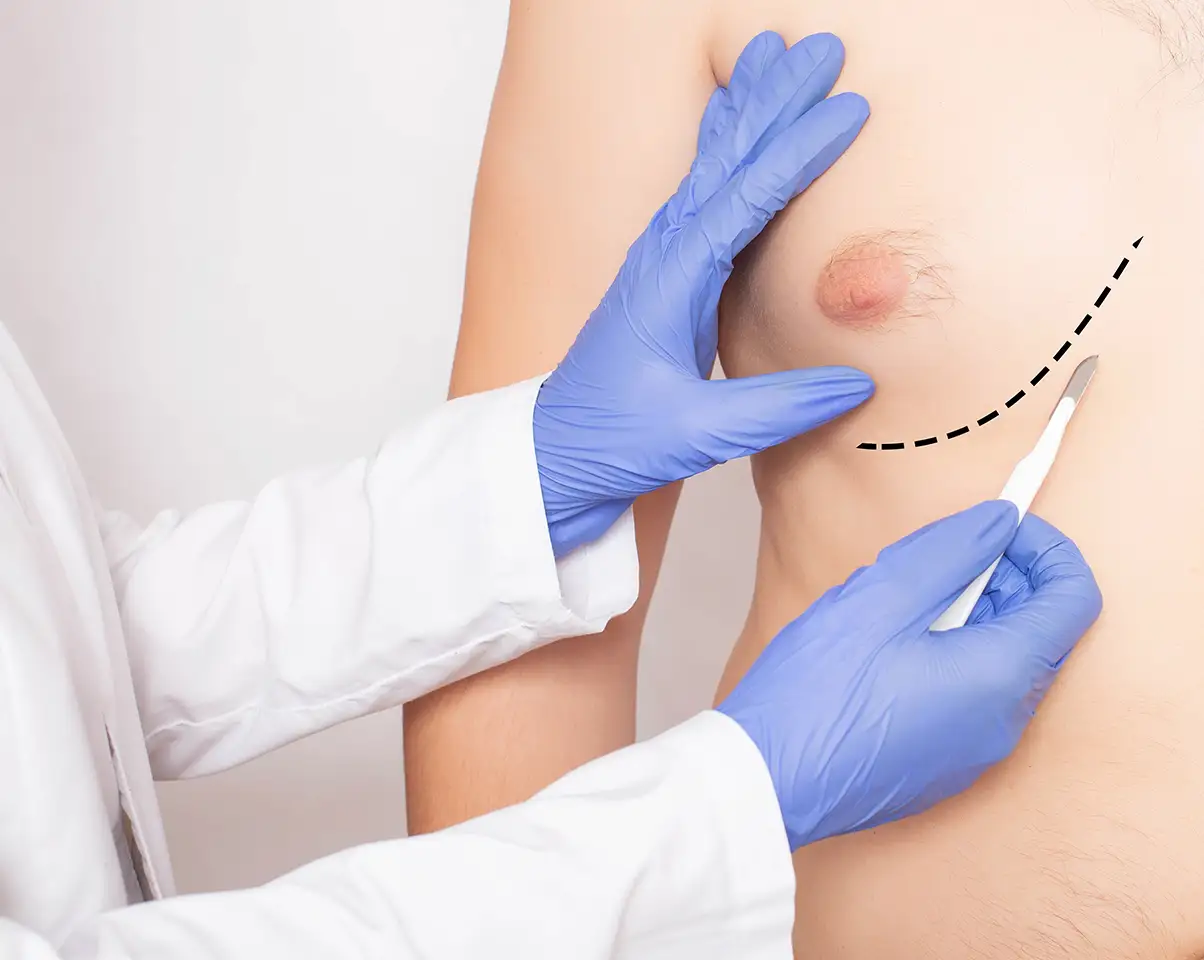
Together, you will discuss whether liposuction, surgical tissue removal, skin removal, or a combination of techniques would provide the most appropriate result.
Your surgeon will also discuss incision placement, potential scars, recovery, risks, and what degree of improvement is realistically achievable.
We encourage you to ask questions, discuss your goals openly, and take the time you need to understand your options. Our goal is for you to leave your consultation with all the information necessary to make the treatment decision that is right for you.
Gynecomastia surgery is performed under general anesthesia and usually takes approximately 1–3 hours, depending on the extent of surgery and whether additional procedures are performed.
The procedure may include:
The incisions and techniques are determined by the amount and type of tissue present. Whenever possible, incisions are placed in locations that minimize their visibility.
Drains may be used depending on the extent of tissue removal. Most patients return home the same day.
Swelling, bruising, soreness, and tightness are common after gynecomastia surgery. The chest may initially appear swollen or uneven as the tissues heal.
You will typically need:
Drain tubes are used in some cases for 1-2 weeks.
Most patients can return to less physically demanding work within approximately 1–2 weeks, depending on the extent of surgery and their occupation.
Strenuous exercise and heavy lifting are generally restricted for about 4 weeks. Your surgeon will provide specific instructions based on your procedure and progress.
Swelling gradually improves over several weeks, while the chest continues to settle and become more defined over the following months.
GALLERY
Real results. Real confidence.