Facial Surgery for Men


The face changes with aging, genetics, weight fluctuations, and sun exposure. Over time, the skin may become less elastic, facial tissues may descend, and changes in facial volume can alter the way the face looks.
Facial surgery for men is designed to address these changes while maintaining the features and proportions that give the male face its natural character. Treatment is individualized based on your anatomy, the areas that concern you, and the degree of change you want to achieve.
The goal is not to make you look different or overly “done.” It is to create a more refreshed, balanced, and natural appearance while preserving masculine facial features.
Facial surgery encompasses a variety of procedures that can address aging, excess skin, changes in facial volume, and specific concerns involving the eyes, brows, nose, ears, and neck.
Depending on your individual needs, treatment may include:
Facial surgery is often customized by combining procedures when multiple areas contribute to an overall concern. For example, a facelift and neck lift may be combined with eyelid surgery or facial fat grafting when appropriate.
Facial surgery may be appropriate for men who are bothered by specific changes in their facial appearance and want a longer-lasting surgical solution.
Good candidates generally:
A consultation is particularly important for men because facial anatomy, skin thickness, hair patterns, facial hair, and masculine facial proportions all influence surgical planning.
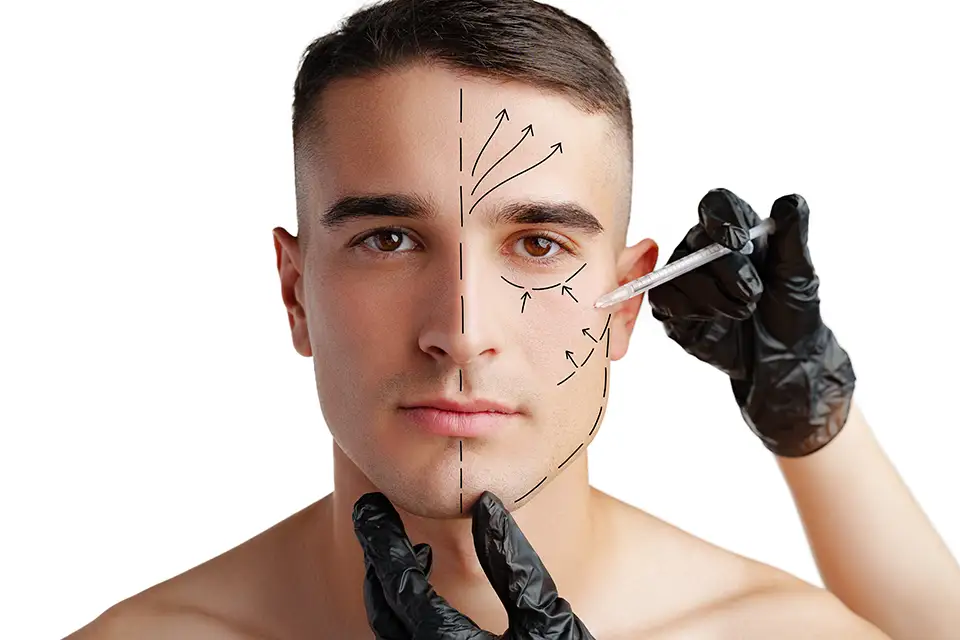
Your consultation will begin with a detailed evaluation of your face, neck, skin, underlying tissues, and overall facial proportions.
Your surgeon will assess:
Together, you will discuss your goals and which procedures may be appropriate. Your surgeon will explain the potential benefits and limitations of each option, including incision placement, expected scarring, recovery, and whether procedures should be performed together or staged.
For men considering facial rejuvenation, maintaining masculine features is an important part of surgical planning. The goal is to improve signs of aging without making the face appear overly tight, altered, or feminine.
The specifics of facial surgery depend on the procedure or combination of procedures being performed. Some surgical facial procedures are performed under general anesthesia while others can be done in the office under local anesthesia.
Depending on your treatment plan, surgery may involve:
The techniques used are selected based on your individual anatomy rather than following a single approach for every patient.
Most patients return home the same day after the procedure.
Though recovery varies depending on the procedure performed, facial surgery is usually very well tolerated. Swelling, bruising, tightness, and temporary changes in sensation are common following facial surgery.
Most patients will need:
Many patients can return to less physically demanding work within 1–2 weeks, although recovery varies considerably by procedure. More extensive facial surgery may require additional time before you feel comfortable returning to work or social activities.
Strenuous exercise is generally restricted for several weeks. Your surgeon will provide specific instructions based on the procedure performed and your progress.
Swelling gradually improves over several weeks, but subtle swelling and tissue changes may continue to resolve for several months as the final result develops.
GALLERY
Real results. Real confidence.