Blepharoplasty (Eyelid Surgery)
Restore a brighter, more youthful expression with a personalized approach to eyelid rejuvenation.


Blepharoplasty, commonly known as an eyelid lift, is a surgical procedure designed to improve signs of aging in the upper eyelids, lower eyelids, or both. Over time, changes in skin elasticity, muscle tone, and the tissues surrounding the eyes can lead to excess skin, puffiness, and a tired or aged appearance.
Eyelid surgery can restore a more youthful and refreshed appearance by removing or repositioning excess skin and tissue while maintaining your natural facial expressions. The goal is not to change the way you look, but to help your eyes appear more rested, open, and in balance with the rest of your face.
You may be a good candidate for a blepharoplasty if you:
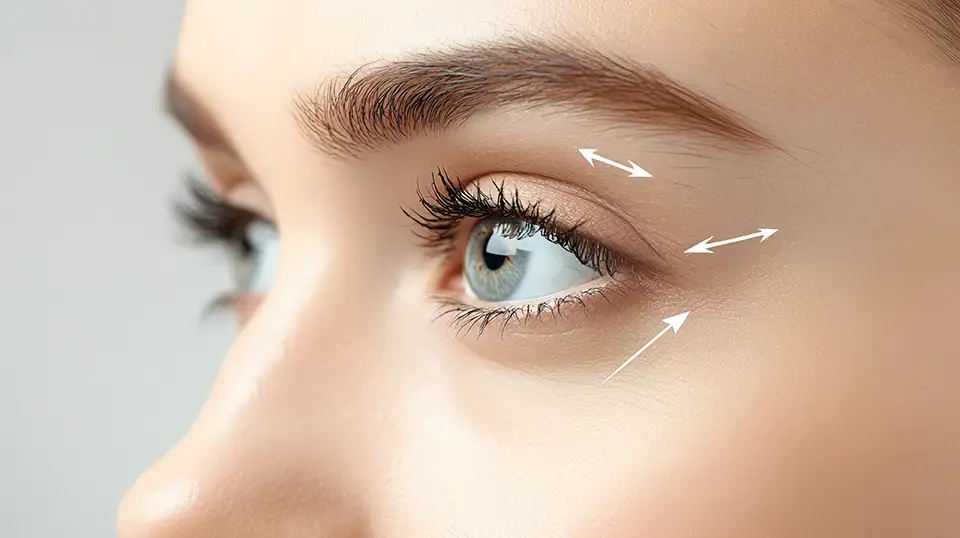
We encourage you to ask questions, discuss your goals openly, and take the time you need to understand your options. Our goal is for you to leave your consultation with all the information necessary to make the treatment decision that is right for you
Blepharoplasty is typically performed as an outpatient procedure. Depending on the extent of your procedure, it may be performed in the operating room under general anesthesia or in the office procedure room under local anesthesia.
For upper eyelid surgery, incisions are carefully placed within the natural crease of the eyelid so that scars are well concealed once healed.
For lower eyelid surgery, incisions may be placed just beneath the lower lash line or inside the eyelid (transconjunctival approach), depending on whether skin removal or fat repositioning is needed.
During surgery, your surgeon carefully removes or repositions tissue to improve eyelid contour while preserving a natural appearance. The goal is a refreshed look—not a hollow, tight, or overly altered appearance.
Most patients return home the same day after surgery.
Recovery after blepharoplasty is generally well tolerated, although swelling and bruising around the eyes are expected.
You can expect:
Many patients return to work and social activities within 1 to 2 weeks, although subtle swelling may continue to improve over several months.
Cold compresses, head elevation, and following your postoperative instructions can help support a smooth recovery.
Strenuous exercise should be avoided until cleared by your surgeon.
Your surgeon will monitor your healing and provide detailed instructions throughout your recovery.
GALLERY
Real results. Real confidence.